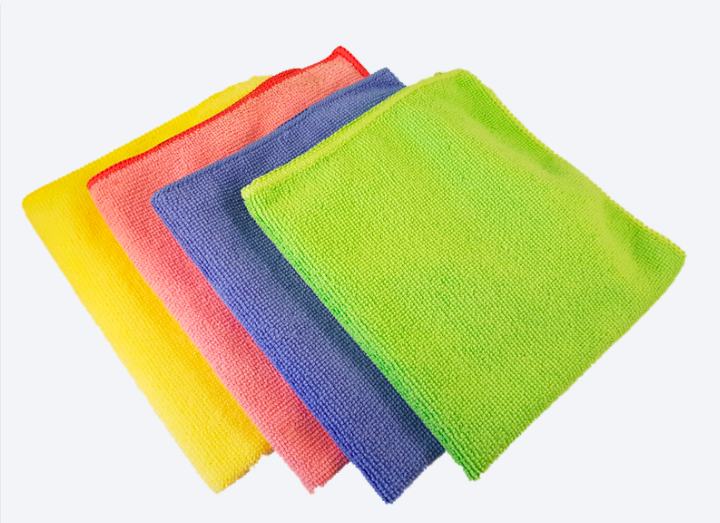

Walk into the cleaning cupboard of a professional cleaner, a hotel housekeeping team, or a commercial cleaning company and you’ll almost certainly see the same thing:
Stacks of microfibre cloths.
They don’t look particularly exciting. No flashy packaging. No complicated instructions. Just simple cloths.
Yet these small pieces of fabric have quietly become one of the most important tools in modern cleaning — and there’s a surprisingly clever bit of science behind why they work so well.
What Microfibre Actually Is
Despite the name, microfibre isn’t a single material — it’s a type of fabric made from extremely fine synthetic fibres, usually a blend of polyester and polyamide.
The fibres are incredibly small — often 100 times thinner than a human hair.
Because they’re so fine, they create a massive amount of surface area within the cloth. When the cloth moves across a surface, those fibres grab and trap particles rather than simply pushing them around.
This is what makes microfibre different from ordinary cloths or paper towels.
Instead of just wiping dirt, it lifts and holds it.
Why Professional Cleaners Prefer Microfibre
The biggest advantage of microfibre cloths is efficiency.
They can remove dust, grease, and bacteria from surfaces with far less effort and often less product than traditional cleaning cloths.
Studies have shown that microfibre cleaning materials can remove over 90% of bacteria from surfaces when used correctly, simply because the fibres physically trap contaminants.
This is why they’re widely used in:
- hospitals
- hotels
- commercial cleaning
- professional housekeeping
They simply perform better.
The Most Effective Way to Use Microfibre Cloths
Many people own microfibre cloths but never use them to their full potential.
A few small techniques make a big difference:
Fold the cloth into quarters.
This creates eight usable surfaces, allowing you to rotate to a clean section as you work.
Use light moisture rather than soaking.
Microfibre performs best when slightly damp rather than dripping wet.
Work from clean to dirty areas.
Start with cleaner surfaces and move toward areas that require heavier cleaning.
These small habits allow the cloth to do most of the work for you.
Where Microfibre Cloths Work Best
They’re particularly effective for surfaces like:
- glass and mirrors
- kitchen countertops
- stainless steel appliances
- bathroom fittings
- electronics and screens
Because the fibres trap dirt rather than spreading it, they often leave surfaces streak-free and polished.
This is why many people find they need far fewer paper towels once they switch to microfibre.
The Importance of Quality Cloths
Not all microfibre cloths are the same.
Lower-quality versions can lose effectiveness quickly or leave lint behind, while high-quality cloths remain durable and absorbent for much longer.
Many cleaning professionals rely on good microfibre cloths alongside reliable cleaning solutions — like the kinds supplied by Max Products — because the combination allows them to clean faster, more effectively, and with better results.
In other words, the cloth and the product work together.
Caring for Microfibre Cloths
To keep them performing well:
- wash them separately from cotton fabrics
- avoid fabric softener (it blocks the fibres)
- air dry or tumble dry on low heat
With proper care, a quality microfibre cloth can last hundreds of cleaning cycles, making it one of the most cost-effective tools in any cleaning routine.
A Small Tool With a Big Impact
Cleaning doesn’t always require more effort — sometimes it just requires better tools.
Microfibre cloths are a perfect example of this.
They may not look impressive, but once you understand how they work, it becomes clear why so many professionals rely on them every single day.
Sometimes the simplest tools quietly turn out to be the most powerful.
Fun Cleaning Fact
Raccoons have a strange habit of “washing” their food in water before eating it — even when the food is already perfectly clean.
Scientists believe it’s not actually about hygiene… raccoons simply have extremely sensitive paws and like the sensation of feeling their food in water.
So technically, raccoons may not be cleaning experts — but they’re definitely enthusiastic about the idea.
Leave a Reply