Almost every cleaning product, from dishwashing liquid to laundry detergent and car shampoo, relies on one family of ingredients: surfactants. Understanding them helps you choose and use cleaners better.
What is a surfactant?
"Surfactant" is short for surface active agent. Each surfactant molecule has two ends:
- A water-loving (hydrophilic) head
- An oil-loving (hydrophobic) tail
The oily tails grab onto grease and dirt, while the heads stay in the water. Together they surround the grease, lift it off the surface and hold it suspended so it rinses away.

The main types
- Anionic: great foamers and grease cutters, common in dishwashing liquids and shampoos.
- Non-ionic: excellent on oily soils and low-foaming, found in many degreasers and laundry products.
- Cationic: used in fabric softeners and some sanitisers.
- Amphoteric: mild and skin-friendly, often in hand soaps.
Why it matters to you
- More foam doesn't always mean more cleaning power.
- Hot water helps surfactants work faster.
- Following dilution rates gives the best balance of performance and cost.
For manufacturers
Formulating cleaning products is a specialist job. Always work with proper safety data sheets, PPE and expert guidance.
Our sister company Max Products manufactures its own cleaning range in Cape Town and also supplies raw materials, including surfactants, solvents and powders.
Products mentioned in this guide
Available now from our sister company Max Products at maxproducts.co.za, in trade sizes and delivered in Cape Town.
 Ammoclean All Purpose Cleaner 5LShop now →
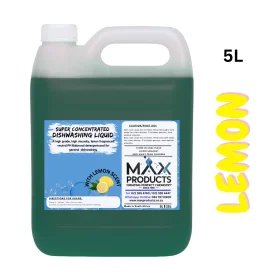 Dishwashing Liquid Super Concentrated 5LShop now →
 Liquid Laundry Detergent 5LShop now →

